

Vita Mahjong review
 Analysis by GetAllApps
It is easy to see the appeal of a familiar tile-matching puzzle: the rules are quick to grasp, a board gives you something clear to focus on, and a short session can fit into a spare moment. Vita Mahjong adds a Kung Fu Panda theme to that classic format, giving the game a recognizable personality without changing what makes mahjong solitaire inviting in the first place. My impression is that it is best approached as a calm, repeatable puzzle rather than a game that needs to reinvent itself every time you open it.
Why the first sessions feel welcoming
The first-week appeal comes from simplicity. You are matching tiles, looking for pairs, and gradually clearing a board. That basic loop is easy to understand even if you have never spent much time with a mahjong puzzle game. There is no need to learn a complicated set of controls before getting started, so the game can feel approachable for a quick break as well as for a longer spell of concentration.
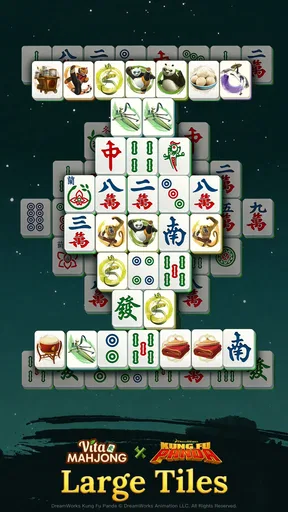
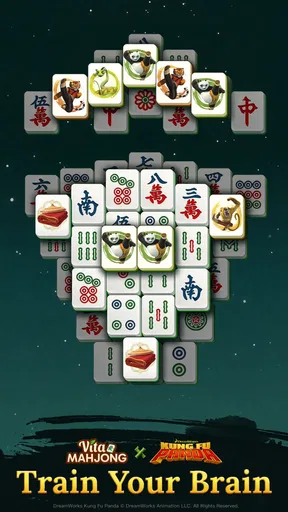
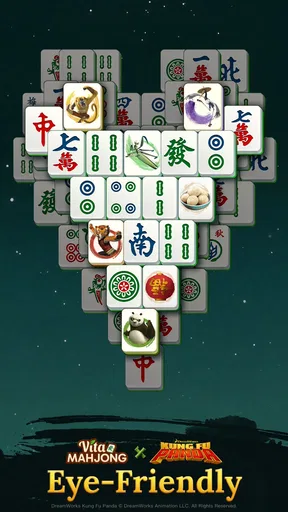
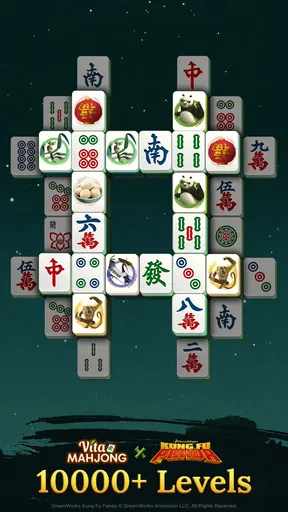
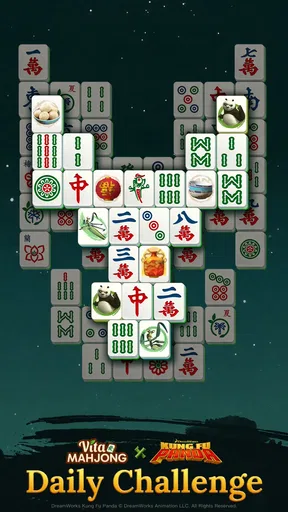
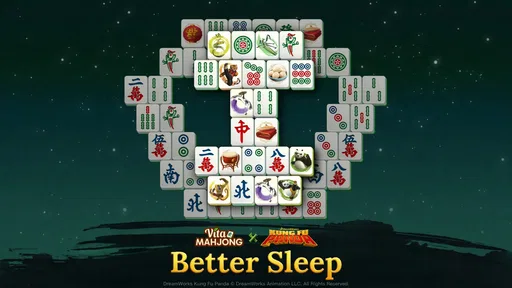
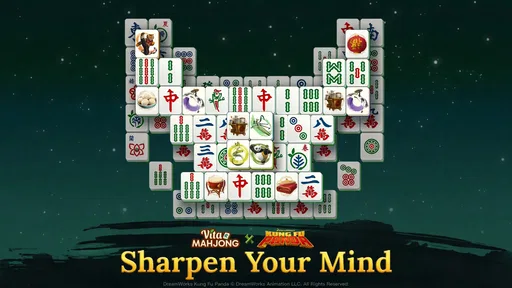
The Kung Fu Panda connection gives the presentation a little extra warmth. It helps distinguish Vita Mahjong from a completely plain tile-matching app, while the central activity remains familiar. I like that balance: a themed identity can make a puzzle feel more personable, but the tiles still need to do the main work. Here, the appeal is less about a complex narrative and more about settling into a recognizable board-clearing routine.
That routine also makes the game easy to revisit. A board presents an immediate objective, and matching pairs gives each session a natural rhythm: scan, choose, and see how the layout changes. The process rewards attention without asking for a huge investment up front. If you enjoy spotting patterns and thinking a few moves ahead, the simple premise has enough substance to make an early session satisfying.
Its store summary describes it as a classic tile-matching puzzle that can be played offline. That is a particularly practical part of the pitch. A puzzle that does not depend on being online can suit travel, waiting rooms, or other moments when connectivity is inconvenient. I see offline play as useful rather than flashy: it supports the everyday habit of opening a game when you have a little time, instead of making every session feel like an event.
A familiar loop with a themed identity
Mahjong solitaire is a genre built around visual recognition and decision-making, not fast reactions. That makes Vita Mahjong a comfortable option when I want an activity that occupies my attention without demanding intense pressure. The satisfaction comes from reading the board, noticing which tiles are available, and choosing a pair that opens up more possibilities. Even a straightforward match can feel worthwhile when it helps reveal a better route through the layout.
The design’s familiarity is both a strength and a limit. It makes the game easy to pick up, but it also means players who already know tile-matching puzzles will recognize the core experience quickly. The Kung Fu Panda theme gives that experience a distinct wrapper, yet the long-term appeal ultimately depends on whether you enjoy the puzzle loop itself. I would recommend trying it for the pleasure of the matching, not expecting a radically different take on the genre.
Does it hold up after the novelty fades?
After the first few sessions, the important question is whether the game continues to fit naturally into your routine. For a board puzzle, recurring value often comes from the kind of attention it asks for: enough to keep the mind engaged, but not so much that every session feels like homework. Vita Mahjong has a clear advantage here. Its central activity remains understandable, so returning after a break does not require relearning a set of elaborate systems.
The game’s scale suggests that many players find that routine appealing. It has an average rating of 4.9 from around 6.5 million ratings, and it has passed 100 million installs. Those figures point to a broad audience, though they do not decide whether it suits any one person. I take them as a sign that the accessible puzzle format has traveled well, not as a promise that every player will stay interested indefinitely.
Month to month, the value is likely to depend on your relationship with repeatable puzzles. If you enjoy returning to a familiar activity and sharpening your eye for patterns, the core loop can remain pleasant without needing constant novelty. If you need a steady stream of dramatic changes to stay engaged, a traditional tile-matching game may feel more routine over time. That is not necessarily a flaw; it is a matter of what you want from a mobile game.
There is a soothing quality to a puzzle whose basic objective is always clear. I can imagine opening it for a brief reset between other tasks, or spending longer when I feel like giving a board more attention. That flexibility is part of the recurring value. It does not require a particular mood or a lengthy commitment, and its offline nature makes it especially suited to being a dependable option when a quick distraction is welcome.
Maintenance and everyday use
In practical terms, Vita Mahjong looks like a low-maintenance game to keep in a regular rotation. The premise is easy to remember, and there is no need to coordinate with other players to enjoy the main puzzle experience. That matters for a casual game: the less effort it takes to get back into a session, the more likely it is to earn a place among the apps you open on an ordinary day.
The game is free to download, with in-app purchases ranging from $0.99 to $49.99 per item. That makes the basic entry point straightforward, while purchases are something to consider according to your own preferences. I would treat any optional spending as separate from the central question of whether the puzzle itself is enjoyable. The most meaningful test is whether you like matching tiles enough to return, not whether you feel obliged to buy anything.
Its audience is listed as Everyone, and the game is developed by Vita Studio. It was released on January 9, 2024, and the current version is 3.44.0, with Android support beginning at version 7.0. These details give a useful snapshot of its place as a contemporary mobile puzzle, but the day-to-day experience is still defined by the board and the matching. For most players, the deciding factor will be whether that familiar rhythm feels relaxing or repetitive.
Maintenance also has a softer, personal side: a game stays installed when it reliably serves a purpose. Vita Mahjong’s purpose is easy to understand. It offers a focused activity for a few minutes, and its offline play makes it less dependent on the circumstances around you. If that kind of convenience matters, it can be a useful addition even if it never becomes the game you spend the most time with.
Where repetition can set in
The same simplicity that makes the game welcoming can become a source of fatigue. Once you understand the central loop, the experience may start to feel familiar in a way that is comforting for some people and predictable for others. If you are looking for a puzzle game with a constantly changing premise, a more elaborate progression structure, or a strong sense of surprise, classic tile matching may not deliver the variety you want.
The Kung Fu Panda theme helps the game feel less anonymous, but it cannot replace a genuine interest in the underlying puzzle. That is why I would set expectations around the genre rather than the licensed presentation. The theme can make the first impression friendlier and give the app a recognizable character; the lasting reason to return is still whether you enjoy examining a board and deciding which pair to clear next.
There is also a difference between relaxing repetition and automatic repetition. When I am in the mood to focus, a familiar matching loop can be exactly right. When I want a game to surprise me or push me into unfamiliar territory, that same loop can feel like something I have already done. Vita Mahjong makes the most sense for the former mood. It is a dependable casual puzzle, not a promise of endless reinvention.
For that reason, I would think of it as a useful regular option rather than a game that must command your attention every day. A light, repeatable pastime does not need to dominate your screen time to justify staying installed. It only needs to be enjoyable when you reach for it. If you begin to feel that each board is blending into the last, taking a break may be more satisfying than expecting the game to transform into a different kind of experience.
Who should keep it installed?
Vita Mahjong is a strong fit for players who want an approachable, offline tile-matching game with a familiar theme. It is easy to understand, simple to return to, and suited to short sessions that ask for concentration without a steep learning curve. I would especially consider it if you like visual puzzles and appreciate having a casual game available when you are away from a reliable connection.
It may be a less natural fit if you want a game whose appeal comes from constant novelty or a deep change in its central mechanics. The basic charm here is consistency. The board gives you a clear task, the matching keeps your attention moving, and the Kung Fu Panda identity adds a bit of color. That combination is pleasant, but it works best when the classic puzzle format is already something you enjoy.
Overall, the game earns lasting space by being easy to pick up and useful in the right moments, rather than by making every return feel entirely new. Its free entry point lowers the barrier to trying it, while optional purchases remain a personal choice. With an average rating of 4.9 and around 73,000 written reviews, it has clearly found a substantial audience; my own verdict is more modest and practical: if a calm offline mahjong game sounds appealing, this is a polished-feeling place to start, and if repetition is what usually wears you down, the novelty may fade sooner.
In the end, I would keep Vita Mahjong installed for its convenience, familiar rules, and gentle tile-matching rhythm, not because it needs to become a daily commitment. It is the kind of game that can be valuable precisely because it asks little of you: open it when you want a focused break, enjoy a board, and move on when you are ready. For fans of classic board-style puzzles, that simple, recurring usefulness is a convincing reason to give it a try.
Pros and cons
Pros
- Clear tile designs make matching easier to follow.
- Relaxed pacing suits short play sessions.
- Familiar mahjong solitaire rules are easy to learn.
- The game offers a calm alternative to time-pressured puzzles.
- Touch controls make selecting tiles feel straightforward.
Cons
- Some layouts may feel repetitive after extended play.
- Tile visibility can be challenging on smaller screens.
- The game may rely on an internet connection for some features.
- Optional ads may interrupt the experience.
- Players seeking competitive multiplayer may find it limited.


